The knock came once, tap . . . twice, tap . . . tap. Reluctantly, the man hurled himself from the bed. He had been working on some documents. His friend in Nairobi who worked with the AU Refugee Commission wanted him to look at them in return for some money for he was a man without a job who spent his days, for the last one year and counting, sleeping, reading newspapers and following the news on Al-Jazeera and TVC. He’d wondered who could be knocking so gently – had the knocks been loud, he would have thought it was his landlord or the landlord’s solicitor – he’d panicked until he opened the door . . . and yawned. Two ladies stood facing him. He yawned again, covering his open mouth with the back of his left palm.
‘Ehe?’
‘Kedu?’ they greeted.
‘Who are you?’
‘We are Jehovah’s Witnesses—’
‘I don’t have the time.’ Before he could bang the door, one of the ladies said,
‘You can spare a few minutes for Jehovah . . . can’t you?’ He paused. He didn’t care much about Jesus but it would be unwise and unscrupulous to close the door to people who made one feel he was closing the door on Jesus Himself.
‘What do you want?’
They responded in unison, ‘To share the word of the Lord with you.’ It was a line they’d used more than a thousand times, he knew. Downcast, he stepped aside. They walked in.
The room was only spacious enough to contain a set of cushions, a wall television, a home theater and a glass centre table, all purchased during the time when the Immigration Service spun money like the minting machine, before he was laid off for accepting bribe from some Chinese immigrants, and before all his women left and turned their eyes that way when they saw him on the sidewalk.
He was feeling sleepy. ‘I’ve had a busy day. What’s up?’ he asked.
‘We would love to share the word of God with you. Thank you for inviting us in. Do you have a Bible, Brother?’
‘Yes. But not sure if I can find it.’
The younger lady said that wasn’t a problem. She opened her Bible to the book of Revelations. She read a portion and they talked for fifteen minutes or thereabout before he said he wanted to go back to sleep.
They invited him to their fellowship on Wednesday, ‘It will do you a lot of good, Brother.’
‘What good?’
‘Draw you closer to God—’
‘I’ve heard.’ He stood. They dropped a leaflet on the table. The older lady rarely talked. He didn’t care.
When they left he didn’t lock the door but went back to lie on the cushion.
***
On Friday evening, he returned from the bank, having cashed the Naira equivalent of $125. On his way home, he bought half a bag of rice, some yams, half a sack of garri and some meat from the slaughterhouse. He considered making Egusi soup and immediately imagined how it would look: the grounded melon sauce, with plenty palm oil and over cooked beef and Nsukka pepper. His taste buds were already tingling with desire.
Once he got home, he settled on his cushion and turned on the television to the news that the Panama Records had been leaked and some world leaders had been implicated in some financial tax evasion fraud. There was a tap on the door. He walked across the room to unlock it.
There was a lady – dark in complexion, average height, slim and voluptuous – he took in all those details before looking at her face: dark, two small tribal incisions, and a shaved head, creamed and shiny.
‘Who are you?’
‘The Jehovah’s Witness—’
‘Oh. We met the last time.’ He held the door.
‘I’d like to share the Word of God with you.’
‘Uhhmm,’ he wondered whether to invite her in. He was hungry and wanted to prepare his egusi, ‘I’m sort of busy, right now.’
Her face grimaced. ‘I won’t take your time.’
He looked her up and down. He liked what he was seeing. ‘Come in.’
She entered the room, sat on the cushion and brought out her Bible. ‘We didn’t see you on Wednesday.’
‘What happened on Wednesday?’
‘We dropped a leaflet the last time, inviting you to our thanksgiving fellowship.’ He looked at the table. She followed his gaze and saw the leaflet, among other documents, including a book with a torn cover.
‘You didn’t even look at it?’
He wanted to tell her that she was beautiful but couldn’t find the words. He wondered if it was right to tell a preacher that. He swallowed saliva.
‘You wanted to say something.’
‘Do you want anything?’
‘I am fine, thank you.’
She opened the Bible and began to read from Psalm 97. He watched the television while she read. When she raised her head and noticed he hadn’t been paying attention, she smiled. He said, ‘Sorry but my attention is on the news.’
‘I was following it before I left the house. The Panama leak?’
‘Yes. Such a shame. There must be Nigerians involved. We are the most fraudulent in the world.’ He wondered why he’d mentioned that, considering it was corruption that had cost him his job.
‘I heard the Senate President is mentioned.’
‘Really?’
‘Yes. Won’t help his case at all at the Code of Conduct Tribunal’
He shook his head.
‘Talk of landing from frying pan to fire.’
‘I agree. He should resign—’
‘Have you seen or heard of a Nigerian politician who resigned before? That never happens. Here we have leaders who believe in their pockets and in enriching their families more than in changing the plight of the masses. In fact, it is wrong to call them leaders. A leader is supposed to have the interest of his people at heart and place it before his. Here, the political position is both an economic and social security.’
‘I agree.’ He stood and went to the refrigerator. He poured a glass of juice for himself. ‘Do you care for a glass?’
‘No, thank you.’
While he sipped, he watched her from the rim of the glass cup – her skirt rode up to her knees.
‘So the Holy Bible teaches us righteousness—’
‘What is your name?’
‘Emilia.’
‘Temitayo is mine.’
He sat on the dining table and listened as she talked. After a few minutes he stood.
‘I must excuse myself. I need to cook. Make yourself comfortable if you want to stay.’
She stood abruptly. ‘Thanks for your time.’
He came close.
‘You should stay. I want to prepare egusi soup.’ He said that with pride. She smiled and thanked him.
‘You should read this.’ She brought out two copies of the Awake. He glanced at each of them.
‘Thank you.’
‘It is free but to support the publication, you can drop some money . . .’ She brought out a brown envelope, ‘whatever you have.’
‘I . . . don’t have money now. Perhaps you can have it back and when next you visit I may have something to give.’
‘No. Take them. Keep them. Next time, you can give.’ She smiled. He noticed her gapped tooth, right in the centre of her lower dentition.
‘What of the other lady . . . the younger one you came with the other day?’
‘Mma? She is fine. But not with me today.’ She turned and headed for the door.
‘Thanks.’ He dropped the books on the table. Read full story in Afreada magazine.
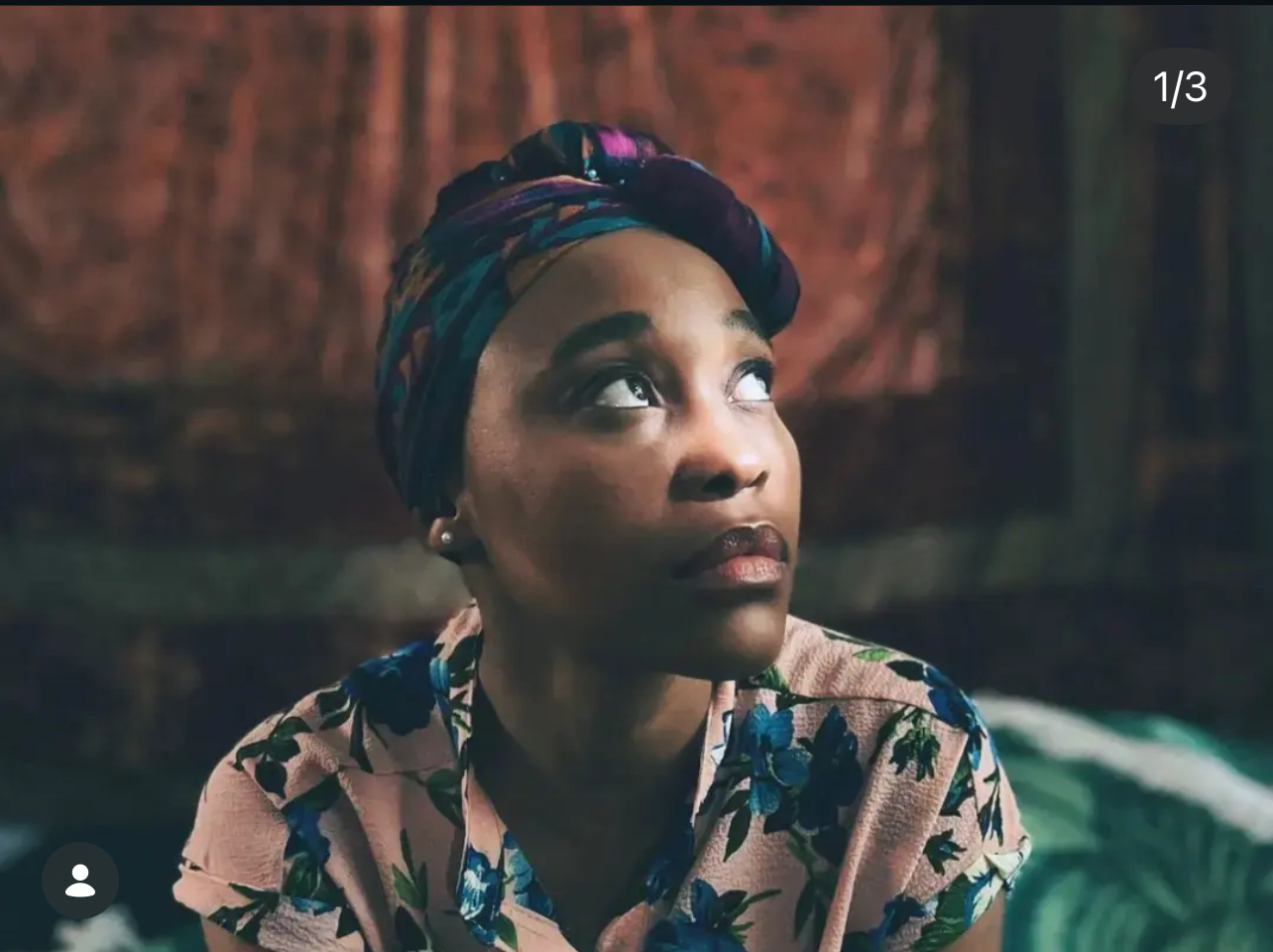
(c). Cover Image: Didintle Khunuo, in the movie, It Has To Do With Emilia by Bump Films, SA.